Early Works

Lossgott's early experiments blend surrealism and personal mythology, laying groundwork for his later thematic explorations.

Scrap Safari

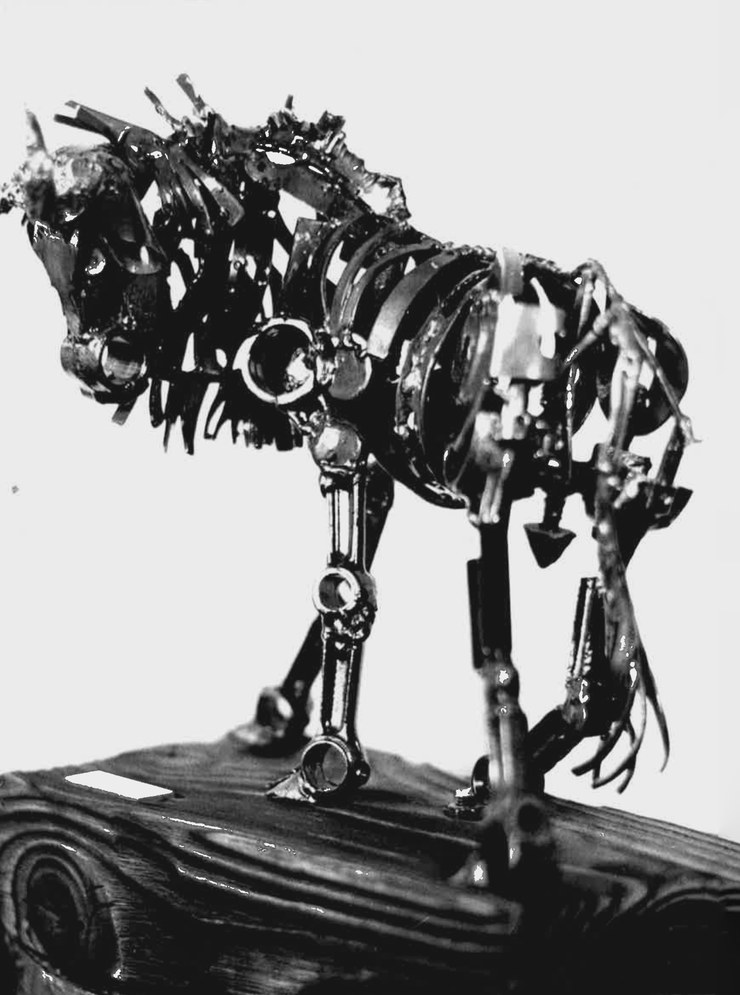
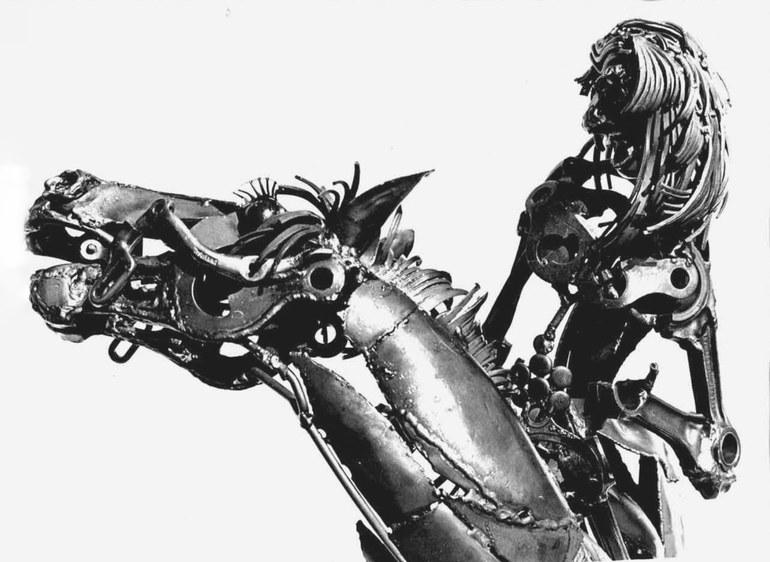
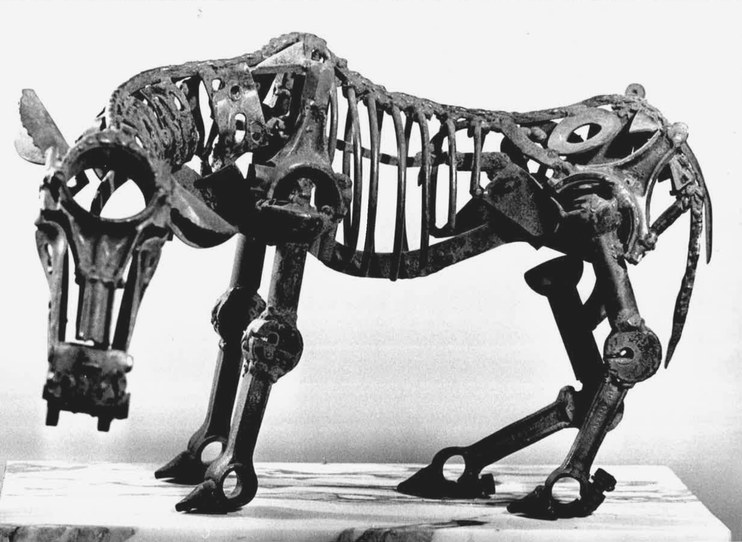
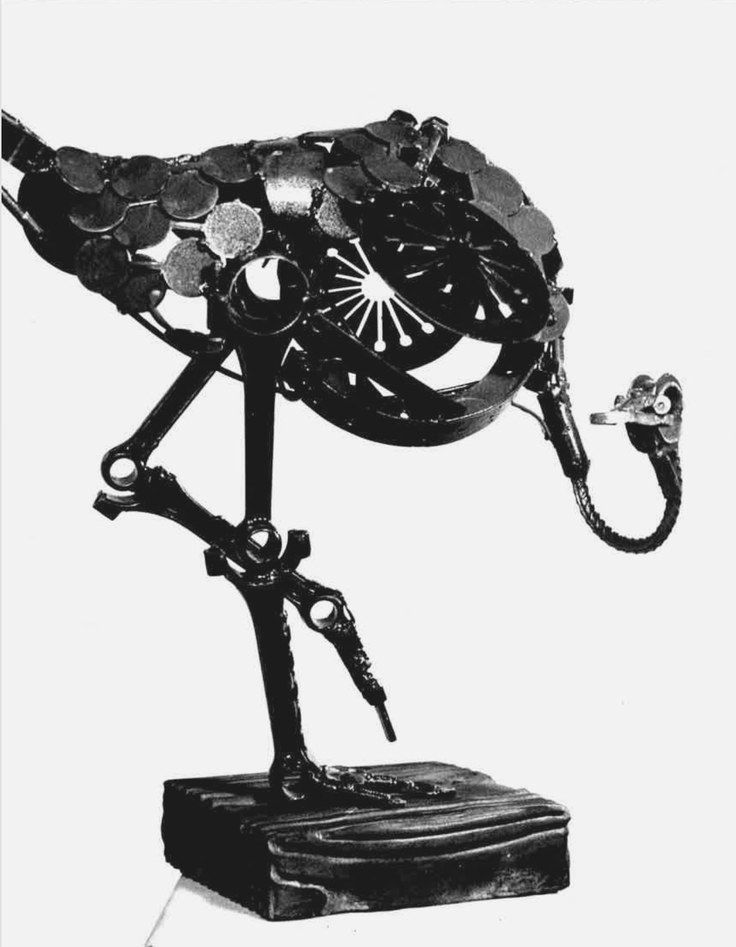
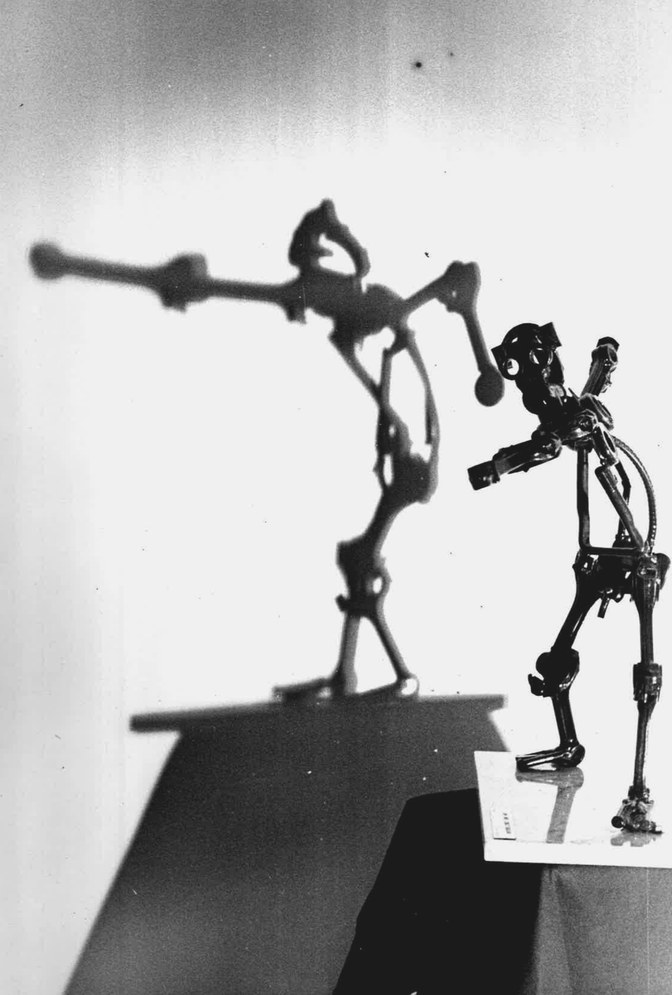
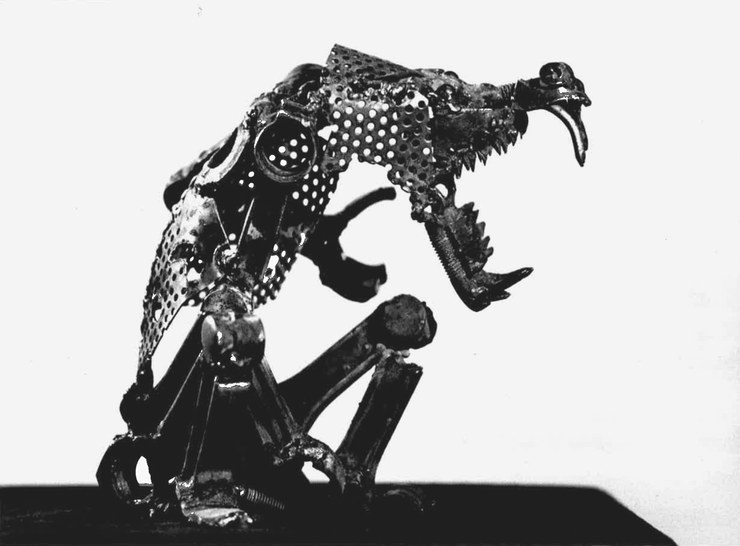
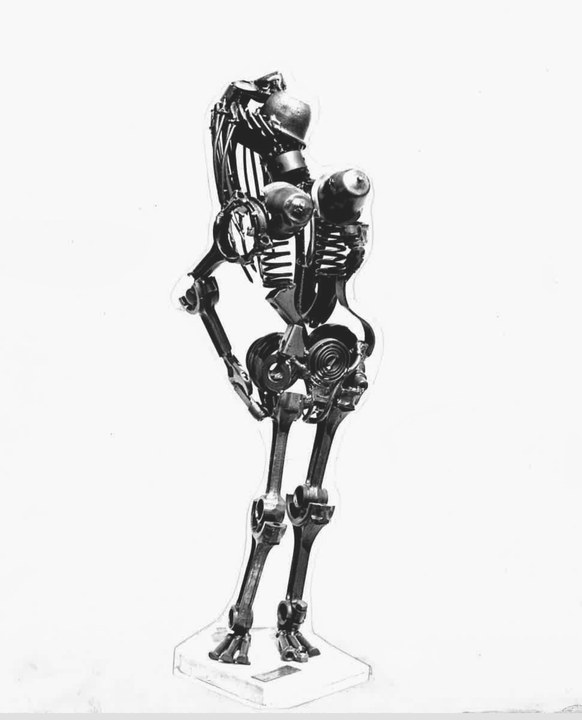
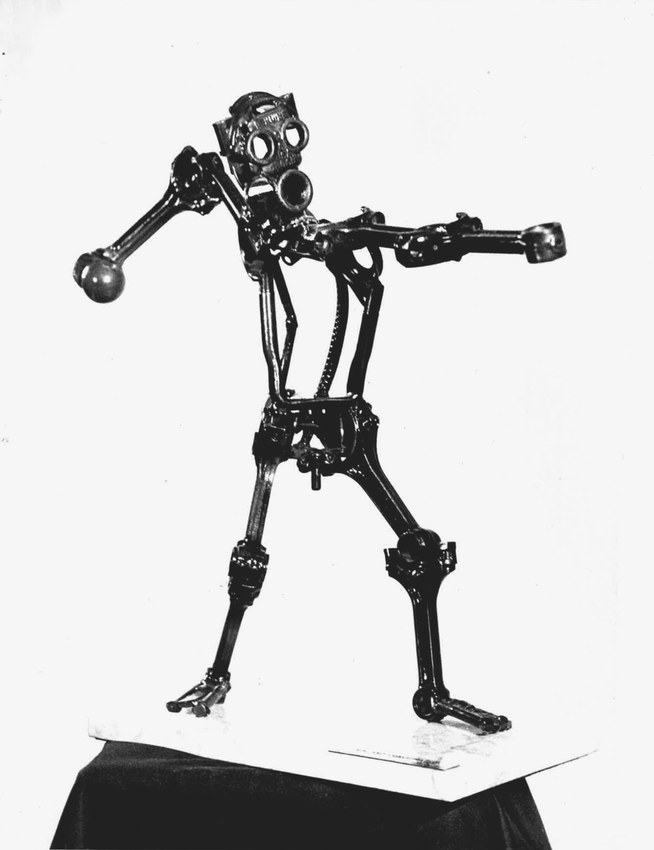
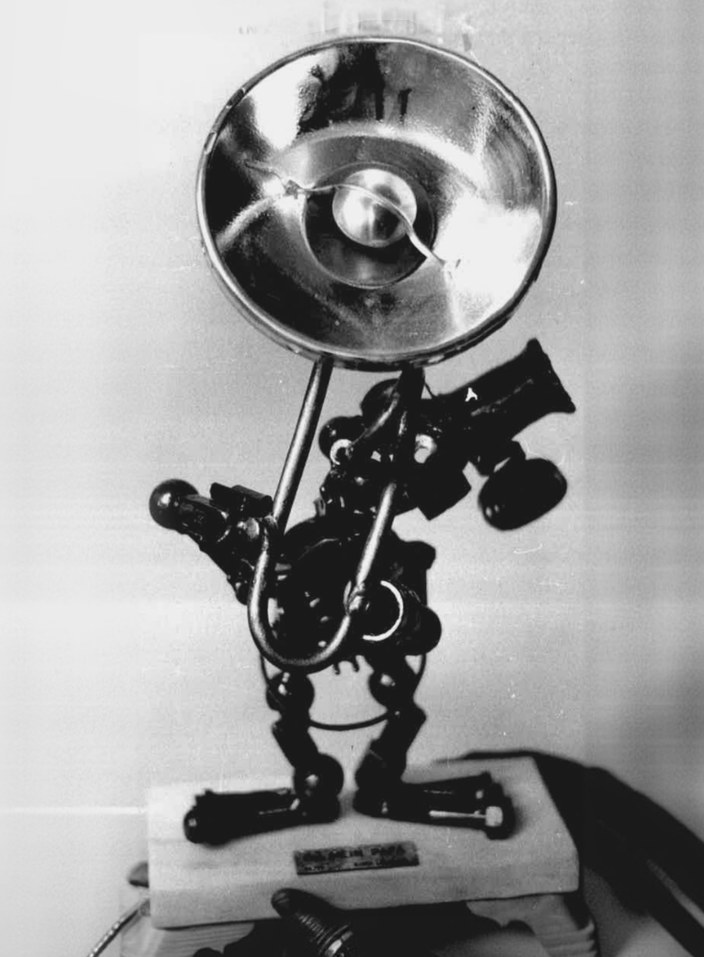
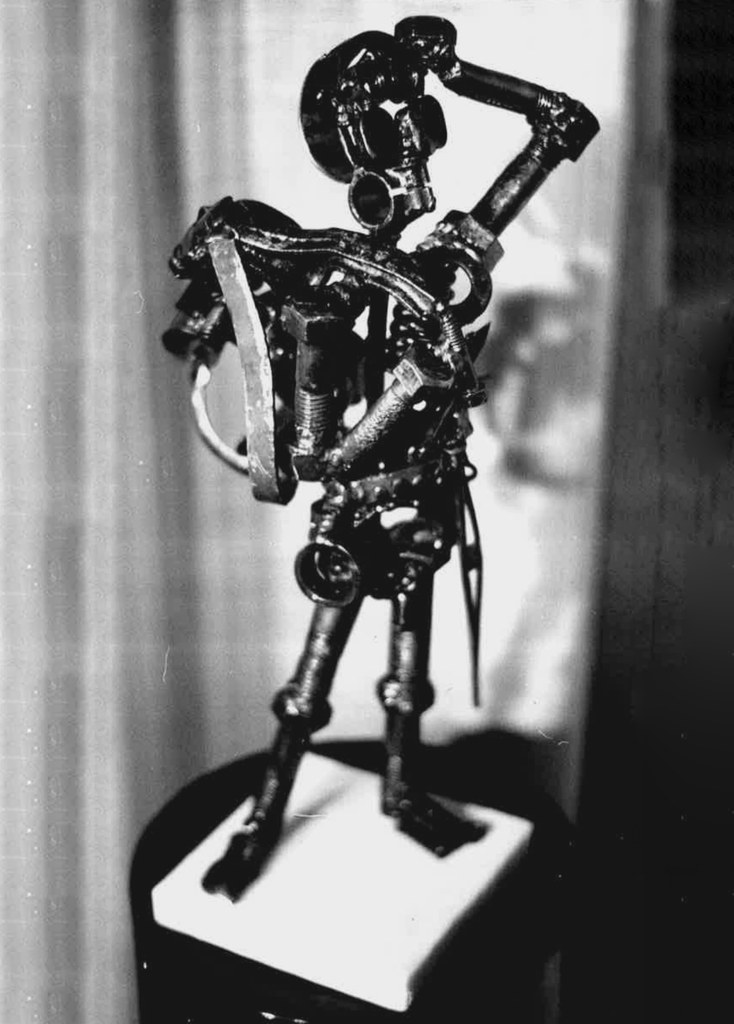
In the late 1960s and through the 1970s, Kurt was a young bachelor in Johannesburg. He had trained as a Maschinenschlosser — machine-fitter — at the Maho factory in Pfronten, Bavaria, and he had the engineer's eye for the organic shape inside a machine part. He foraged the city's scrap yards, welding what he found into humanoid figures and animals. He worked with an arc welder, a hammer, pliers, and a vice in a converted servants' quarter near his Yeoville flat.

The mood is a child's-eye humour rather than satire. Horses are given eyelashes; monsters are given fangs. The figures borrow from Creepy, the American horror-comics magazine Kurt collected through these years. The same hand made the Flying Owl with Child at Johannesburg Zoo in 1972 — a revolving sculpture turned on a hidden motor, which the East Rand local paper Eastern Echo called a flight of fantasy.

Early Bronzes

By the late 1970s, the fragments were wax, Kurt was casting in bronze — surreal, fragmentary studies, figurative abstraction of gravity and motion that prefigure the Animals, Rugby Players, and draped figures of Tomorrow's Angels a few years later.

Cuffed Hands

Rough bronze hands bolted together.

Born from a recurring nightmare, two bronze hands grasp at nothing while a bolt fixes their wrists. Resting on knuckles flaring with texture, extending upwards on long torn muscle strands, they evoke stigmata, handcuffs and the raw trauma of entrapment. Mounted on natural stone, Cuffed Hands are visceral relics of subconscious fear and sacrifice.

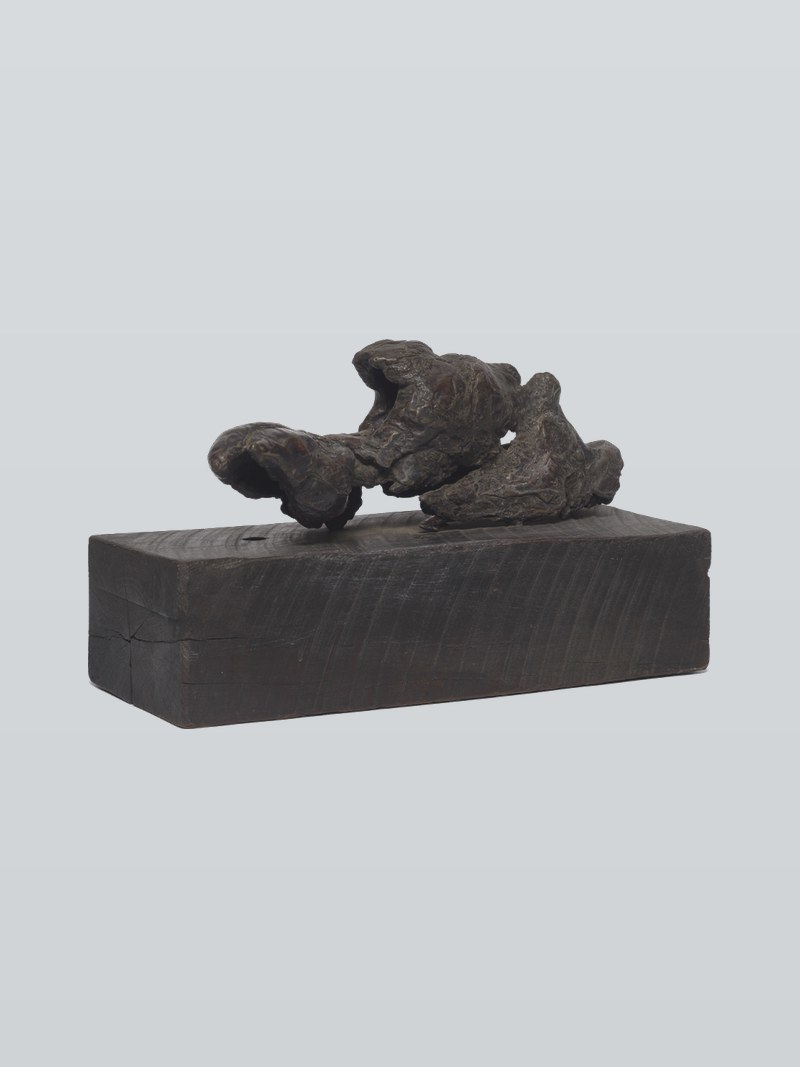
Fallen Torso

Fragmented bronze torso twisted in absence.

Fallen Torso isolates the human core muscles — no arms or head — casting raw mass in bronze. Rough surface modelling hints at cloth folds or sinew, embodying vulnerability and transformation. Made in 1979 and later retitled, it prefigures Lossgott's draped figures.

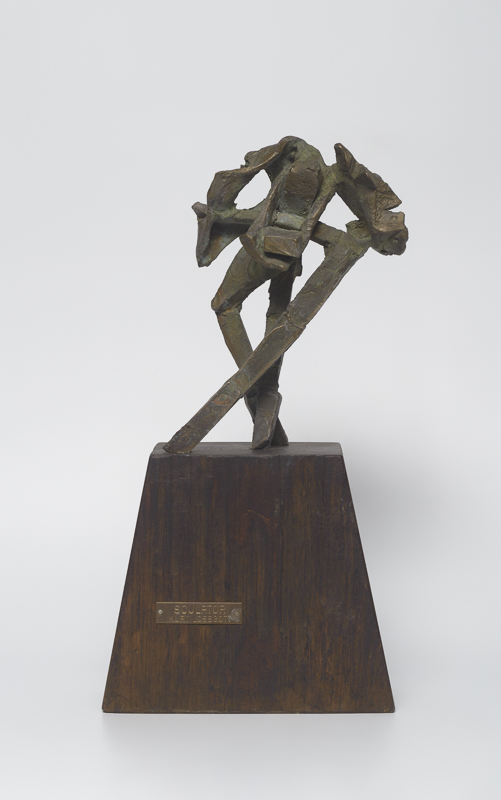
First Steps

Abstract sculpture with comic elements capturing jumbled motion.

First Steps is a small bronze figure of jumbled forms, as if a machine or a young animal learning to walk. Simplified forms and energetic posture celebrate early beginnings — both literal and metaphorical — in human development.

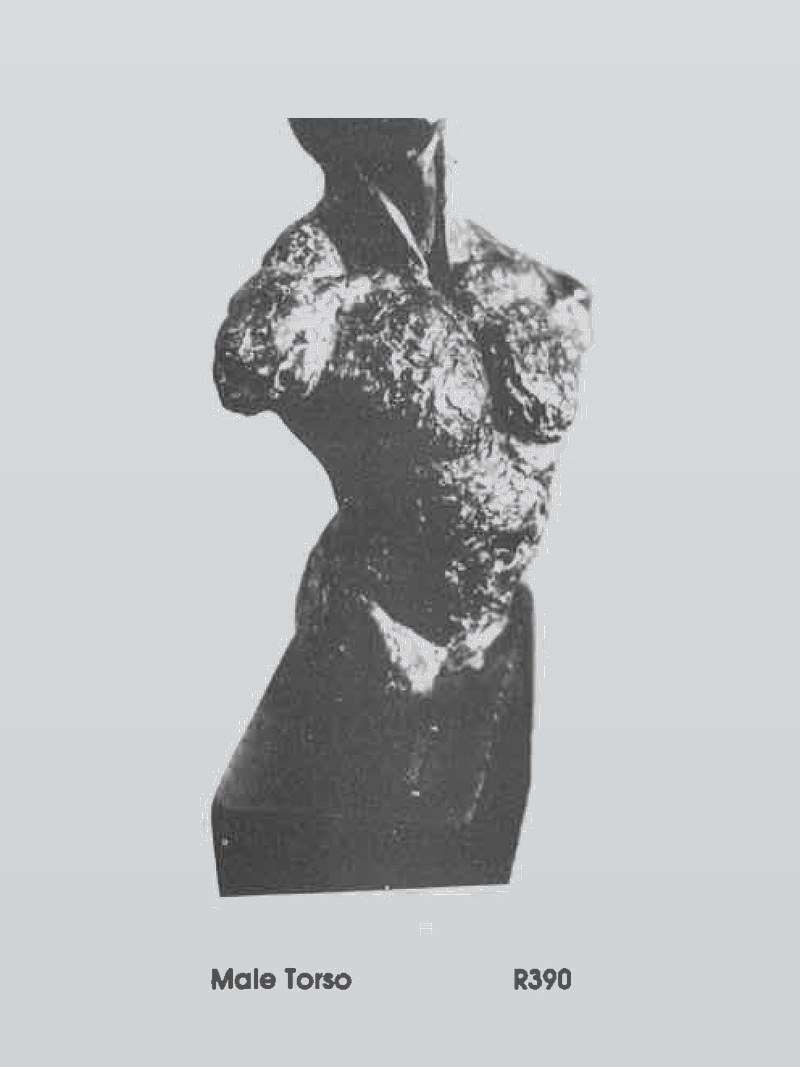
Male Torso

Vertical bronze study of the male form, 46 × 23 cm.

Male Torso is a vertical study cast in bronze. An early figure work that pre-dates and informs the draped figures of the Tomorrow's Angels series. The work appears at Strauss & Co under the title Grimacing Man, and is also recorded in askART's auction database.

also known as Grimacing Man (Strauss & Co); also recorded on askART

Where to next

Kurt's very first sculpture was a small welded figure made as a gift for a friend — never delivered, because Kurt liked it too much to part with. In the 1960s and 70s, he worked with nothing more than an arc welder, a hammer, pliers, and a vice, in a converted servants' quarter near his Yeoville flat.

Read the bio chapter on the welded-metal years →